Review
Well, I'll Let You Go
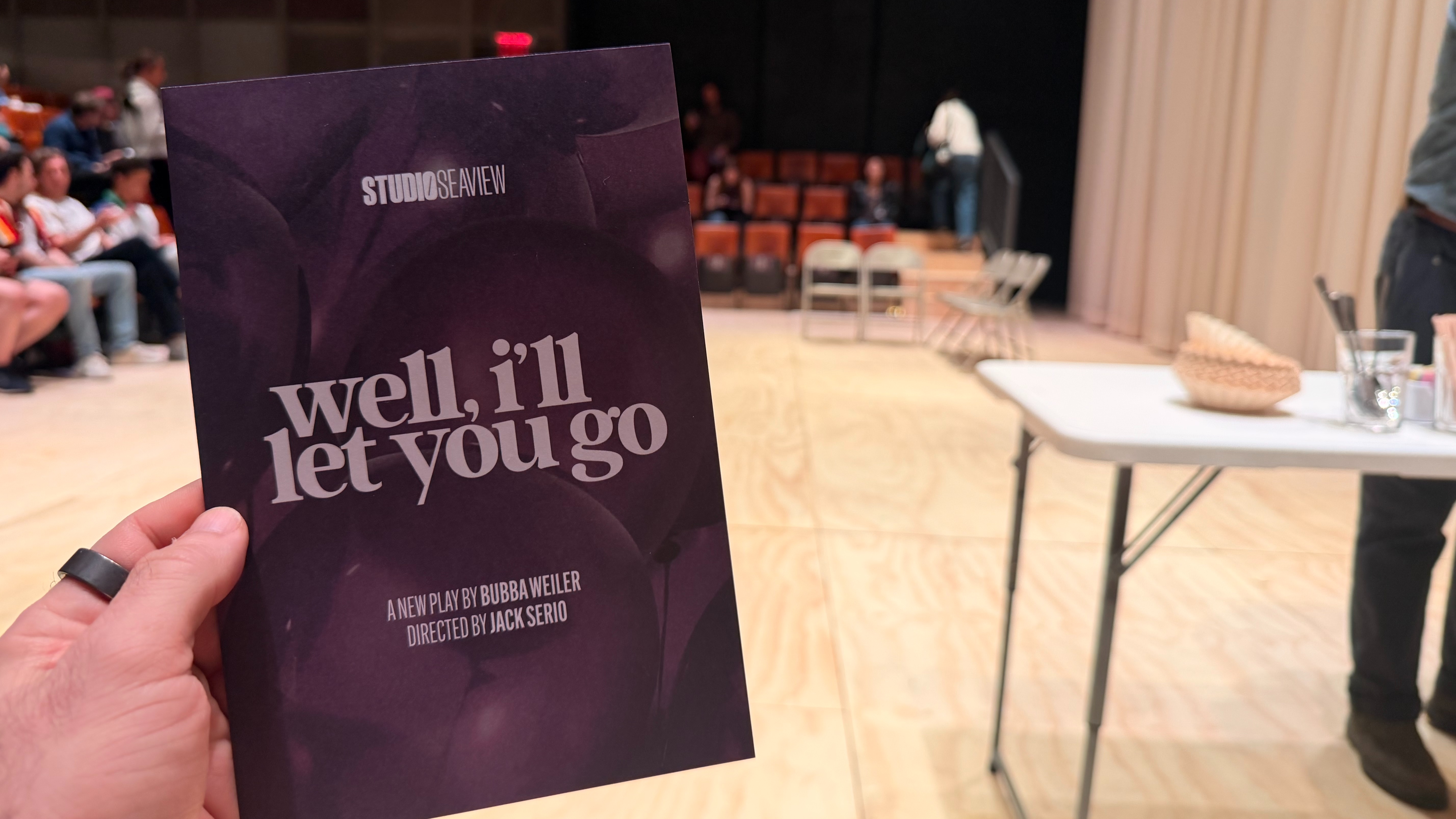
I went into Studio Seaview last night for many reasons, but for one above all the others, and her name is Quincy Tyler Bernstine. The Irondale run of Well, I'll Let You Go had been the thing everyone kept telling me I'd missed, and Bernstine's Maggie was the performance the Obie and the Drama Desk people couldn't stop handing things to. So I caught the May 30 show at 8pm with high expectations, and she cleared them without seeming to try. That's the thing about her. She doesn't reach for the big emotional beats; she lets them find her, and you watch a whole interior life move across her face in real time. There's a stillness to her that pulls you in close, and then a flicker of humor that cracks the whole thing open. I've admired her going back to Doubt on Broadway, and this is the kind of performance that solidifies your professional admiration of a someone.
What she's playing is trickier than the marketing lets on. Maggie has lost her husband, and she's spending the play sitting inside the wreckage of that, except the wreckage isn't only grief. It's doubt. The circumstances of how he died don't add up, and the more she turns the thing over, the less sure she is she knew him at all, or knew the life they supposedly built together. Bubba Weiler's writing is patient and a little merciless about this. The question isn't just "how do I go on," it's "who was he, and what does that make all of it." That's a far stranger and more interesting play than the grief-drama I walked in expecting.
The structure is the quiet genius of it. We never get Maggie's husband whole. We get him in pieces, refracted through a parade of visitors who keep dropping in on her: family, friends, strangers, all of them well-meaning, all of them there to check on her or plan the memorial or organize some community celebration of a man and a death she can't make sense of. Each visitor turns up with their own reason for being there, and some make more sense than others, with most leaving Maggie with more questions. Director Jack Serio stages these arrivals and departures with real control, letting the contradictions stack up rather than smoothing them over. There's no late seating and no re-entry, and once you're inside that hundred-minute spell you understand why. One does not break this room.
The ensemble doing this refracting is superb. Constance Shulman, Matthew Maher, Danny McCarthy, Emily Davis, the whole company moves like people who have lived in this play long enough to trust it completely, and they have; most of them carried it over from Irondale. Frank J. Oliva's Obie-winning and simple scenic design and Stacey DeRosier's lighting build a world worn-in enough to feel like a real place memory could live, and Avi Amon's original music threads under it all without ever announcing itself.
Here's what surprised me. For a play that spends its length pulling at a loose thread and confronting grief and memory, it left me lifted rather than gutted. The warmth doesn't come cheap or early. It's earned, and it has less to do with answers than with the act of asking in good faith, with sitting in a roomful of people who keep showing up for one another even when the picture refuses to come clear. It made me grateful in a way that felt clean rather than heavy. That's a rarer trick than tears, and this production pulls it off without a hint of strain. It closes June 20. Go while you can.
I attended on my own ticket, not on a press pass or invitation.