Review
Urinetown at New York City Center Encores!
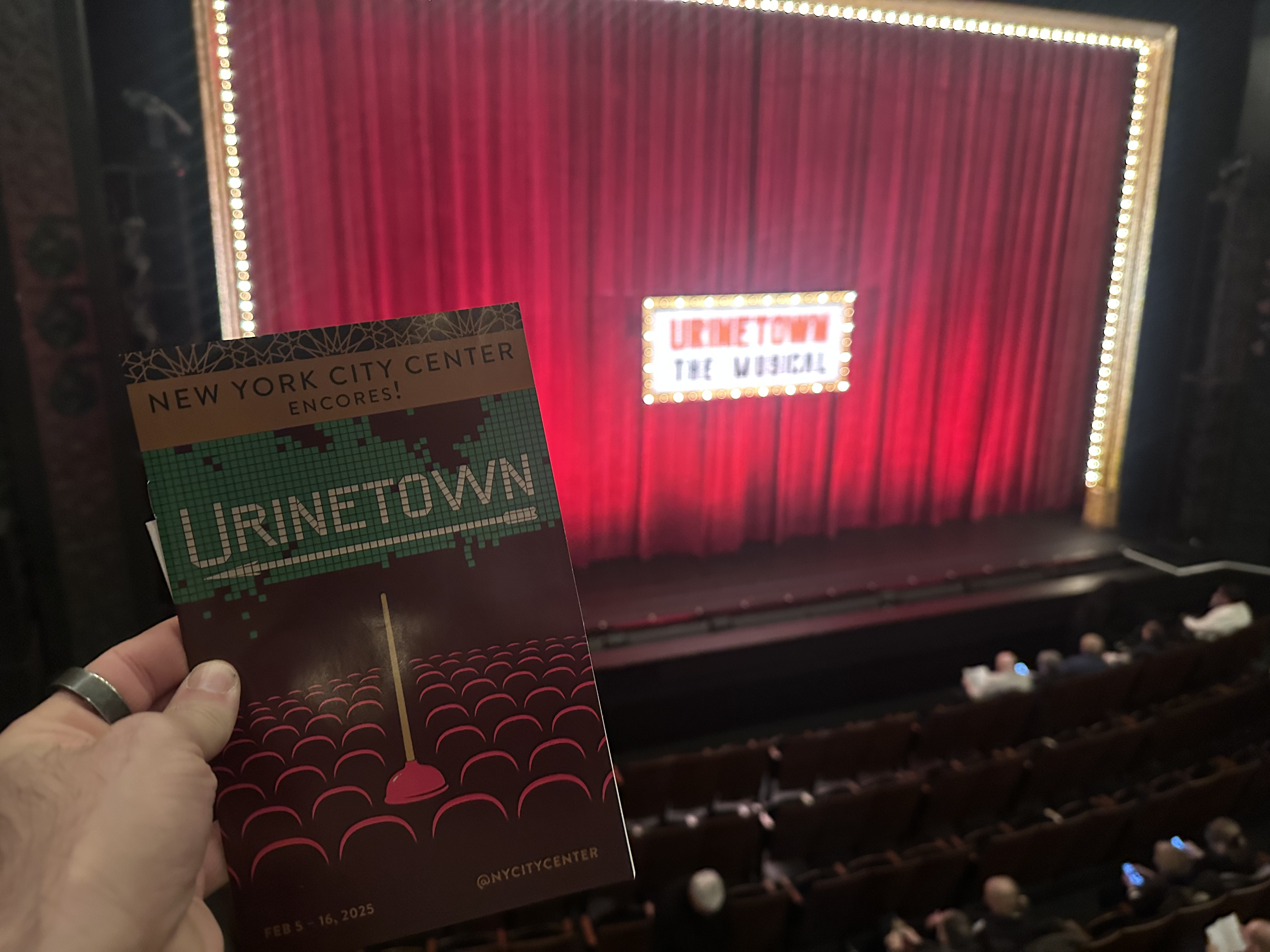

Having only experienced Urinetown through its cast recording, I was eager to finally see it live—and what a phenomenal production to witness for the first time. The New York City Center Encores! staging delivered an electric, hilarious, and sharp rendition of this beloved satirical musical, with a cast that elevated the material in every way.
Jordan Fisher was absolutely outstanding as Bobby Strong, bringing an incredible mix of earnestness, charisma, and vocal prowess to the role. His performance was both deeply engaging and refreshingly heartfelt, making Bobby’s idealistic revolution feel urgent and sincere. Rainn Wilson was an excellent Cladwell, striking the perfect balance between corporate menace and comedic absurdity. His presence on stage was commanding, and he leaned into the campy villainy with delightful precision.

Greg Hildreth was pitch-perfect as Officer Lockstock, fully embracing the show’s self-aware humor and larger-than-life narration. As both enforcer of the law and storyteller, he effortlessly switched between intimidating authority figure and winking, fourth-wall-breaking commentator. His dry delivery, impeccable comedic timing, and interactions with the audience made every moment he was on stage a delight.
Stephanie Styles was a fantastic Hope Cladwell, bringing a wonderful balance of wide-eyed naivety and unexpected grit to the role. Her chemistry with Fisher’s Bobby Strong was electric, making her transformation throughout the show even more compelling. Pearl Scarlett Gold delivered a standout performance as Little Sally, perfectly capturing the role’s blend of innocence and sharp self-awareness. Her scenes with Hildreth’s Lockstock were some of the show’s funniest, playing off each other with impeccable timing and a knowing wink to the audience.
As with any Encores! production, there were some librettos in hand, but they in no way detracted from the energy or commitment of the cast. If anything, it was a reminder of the raw, in-the-moment brilliance that makes these productions so special. The entire ensemble delivered standout performances, fully embracing the show’s biting humor, Brechtian influences, and gleefully meta-theatricality.
Urinetown’s Meta-Theatrical Genius
One of the things I love most in theater is when a show acknowledges the audience’s presence, playing with the idea that it is a performance rather than simply presenting a story. Any show with a narrator naturally leans into this—Hadestown, Into the Woods, and countless others—but Urinetown takes it to another level. It doesn’t just acknowledge the audience; it acknowledges itself as a musical, dissecting its own structure, tropes, and expectations with a razor-sharp wit.
Officer Lockstock, played masterfully by Greg Hildreth, is the vehicle for much of this self-awareness. He interacts with other characters while narrating, breaking the fourth wall to discuss storytelling conventions, foreshadow plot twists, and joke about the limitations of musical theater itself. His exchanges with Pearl Scarlett Gold’s Little Sally are some of the show’s best moments, poking fun at the audience’s expectations while still driving the plot forward.

The Moral Ambiguity of the Ending
Now, a full 24 hours after seeing it, the part that lingers with me the most is the sheer ambiguity of whether or not the “good guys” actually won. Yes, Bobby Strong’s revolution succeeded. Caldwell B. Cladwell was overthrown. The city was now “free”—people no longer had to pay to pee, and UGC’s corporate stranglehold was broken. The audience cheers for this, of course. It’s the classic underdog narrative, the triumph of the people over corporate greed.
But then comes the epilogue. The final narration makes it clear that this so-called victory actually hastened the downfall of the city, leading to the premature deaths of everyone. The drought was real. The limited water supply was real. The regulation, however corrupt, was at least sustaining life—without it, society collapses entirely. This raises an unsettling question: Were we, the audience, cheering for the wrong side?
Urinetown brilliantly manipulates our expectations, getting us to root for revolutionaries who, in their idealism, may have doomed civilization. It forces us to question whether absolute freedom is always the best choice and whether some forms of control—even unethical ones—are necessary for survival. Does the show suggest that evil is sometimes a necessary component of life? That without the oppressive regulations of UGC, the people were doomed anyway? It certainly seems that way.
The genius of Urinetown is that it refuses to give us an easy answer. It revels in contradiction, forcing us to laugh at musical theater tropes while making us deeply uncomfortable about the real-world implications of its message. We want to believe that revolutions lead to a better future, but Urinetown reminds us that sometimes, things are far more complicated than that.
Seeing it performed live with such a stellar cast only reinforced how brilliant and unique this show truly is. It’s funny, biting, wildly entertaining—and deeply, deeply unsettling.