Review
Specimen
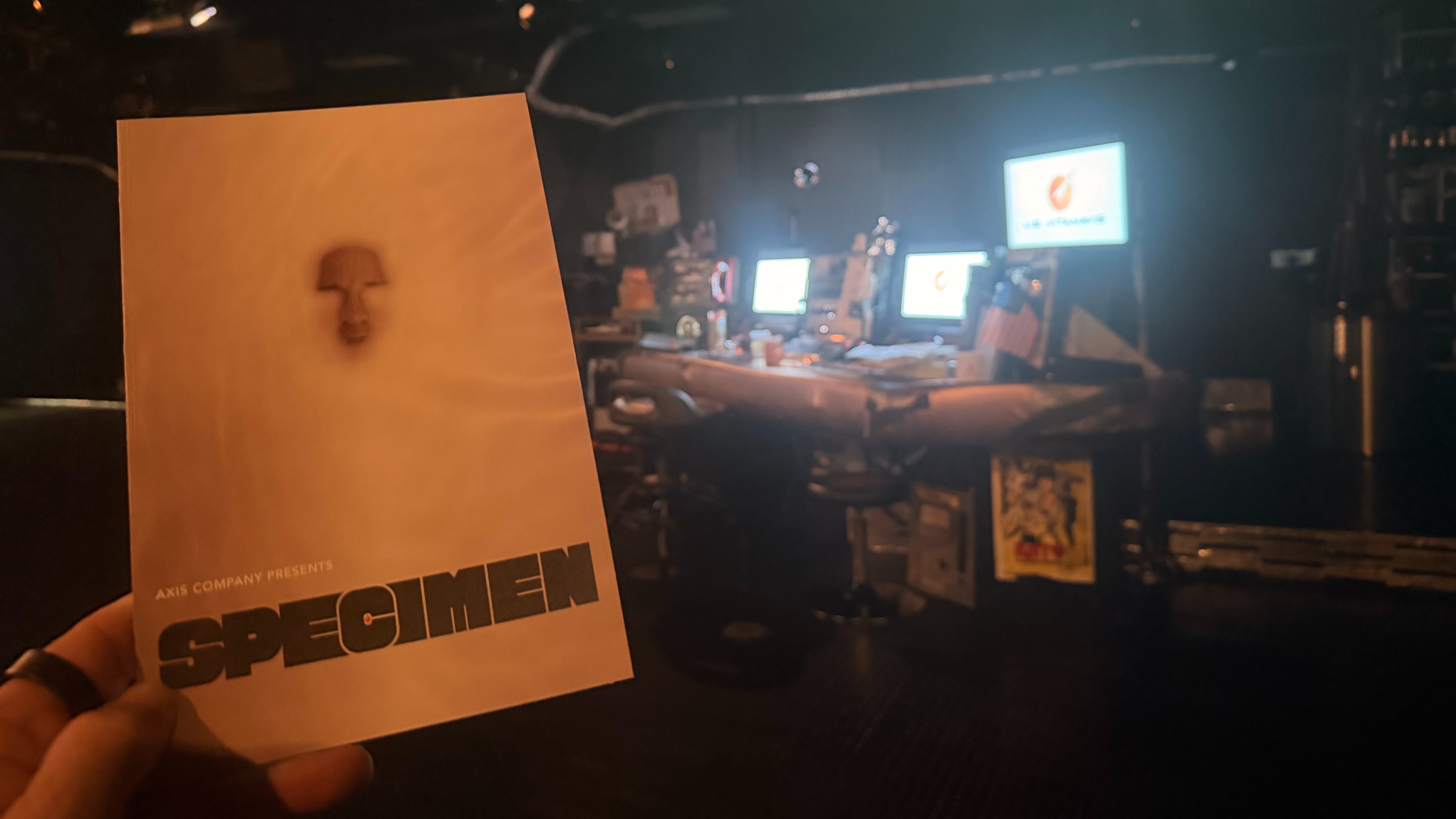
Specimen at Axis Theatre: Adrift Within Sight of Home
Minor spoilers: this review discusses the play's premise and themes, but not its ending.
I saw Axis Company's Specimen, now back in an encore engagement, at Axis Theatre on November 12, 2026, at 7 p.m. Written and directed by Randall Sharp, the play takes place aboard the Nomad, a failing research vessel owned by the corporation VitaNavis, whose skeleton crew is stranded just short of Earth's pull after an unexplained explosion knocked out the engine, the radio, and, to their considerable dismay, the toilets. Every living specimen they collected has died, the rival ship Jericho seems certain to win the company's top honor once again, and the crew is surviving on a medicinal soup that may or may not have been recalled. When an apparently empty pod docks and its occupant stumbles out gasping for clean air, the crew decides almost at once that he is not a man but an alien lifeform worth millions, and the rest of the evening tests how far they will go to keep believing it.
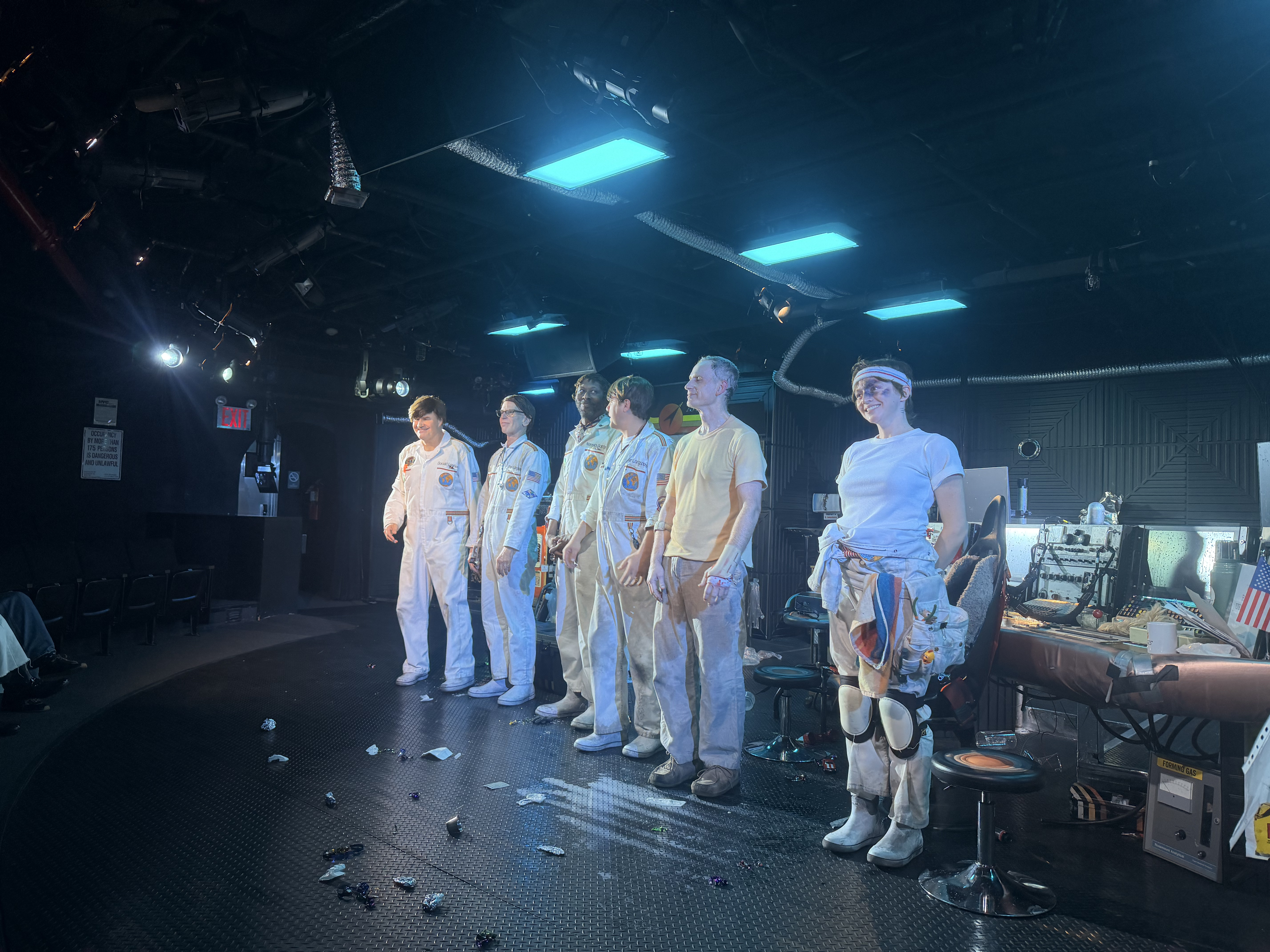
Sharp stages all of this loud and fast, with characters talking over one another, a corporate recruitment video and old crew logs that keep switching on by themselves as the ship's systems fail, and a steady stream of stage business that seems to have no bearing on the story. The chaos has a purpose, since a contagion the crew calls "the brain thing" is working its way through the ship and their growing incoherence charts its progress. The production does provide exposition, though not on the stage: a mock New York Times front page in the lobby, dated May 17, 197-, with the final digit deliberately blurred, announces that VitaNavis is turning the collection of living specimens into a new American industry, that its crews earn a share of each specimen's value through a plan called "The Slice," and that the Jericho is the model of its fleet. Arrive early and read it, because the play itself offers little else. A theatergoer seated near me waved their arms in exasperation each time a character did something that seemed to lead nowhere, and bringing a little of that worldbuilding onto the stage, along with a clearer sense of what drives these people beyond the illness, would have given the audience firmer footing without sacrificing the madness.
What rewards patience is the question beneath the noise. Every sign that the visitor is human, from his sweat and tears to the name on his jacket, gets explained away, because a man is worth nothing to this crew and a specimen is worth a fortune. My own reading is that he is a problem someone else wanted gone, and the play becomes a parable about how competition pushes its risks onto whoever is most desperate, and how quickly desperate people stop seeing one another.
Britt Genelin gives the evening's most absorbing performance as Overholser, the ship's new chief engineer and the character I felt for most. Even outside the spotlight she never disengages, nodding along to the music while working beneath the control panel and reacting to every bit of lunacy around her. Brian Barnhart commits completely as the Specimen; his performance is physical, vocal, and anguished, sending him running about the stage and flopping across the floor. The rest of the ensemble kept me invested in every character, and each gets a moment to shine, most memorably Andrew Dawson as the strange Doctor Gardener and Julian Rozzell Jr. as Gordon, the crew member who would very much like to be captain. Jon McCormick and Jim Sterling round out the stage ensemble, with Spencer Aste, Robert Ierardi, and Lynn Mancinelli appearing on screen.
The design does a great deal of the storytelling the script withholds. The set, by Randall Sharp, Jon McCormick, and Lynn Mancinelli, with set decoration by Mancinelli, is cluttered and lived-in, the cramped quarters of a crew that has been out too long and stopped caring how things look. Multiple video screens, designed by Nicholas Guldner, flicker to life with the recruitment pitch and stray crew logs whenever the ship malfunctions, and offer glimpses into the sealed-off parts of the ship, while David Zeffren's moody lighting keeps the Nomad feeling dim and failing.
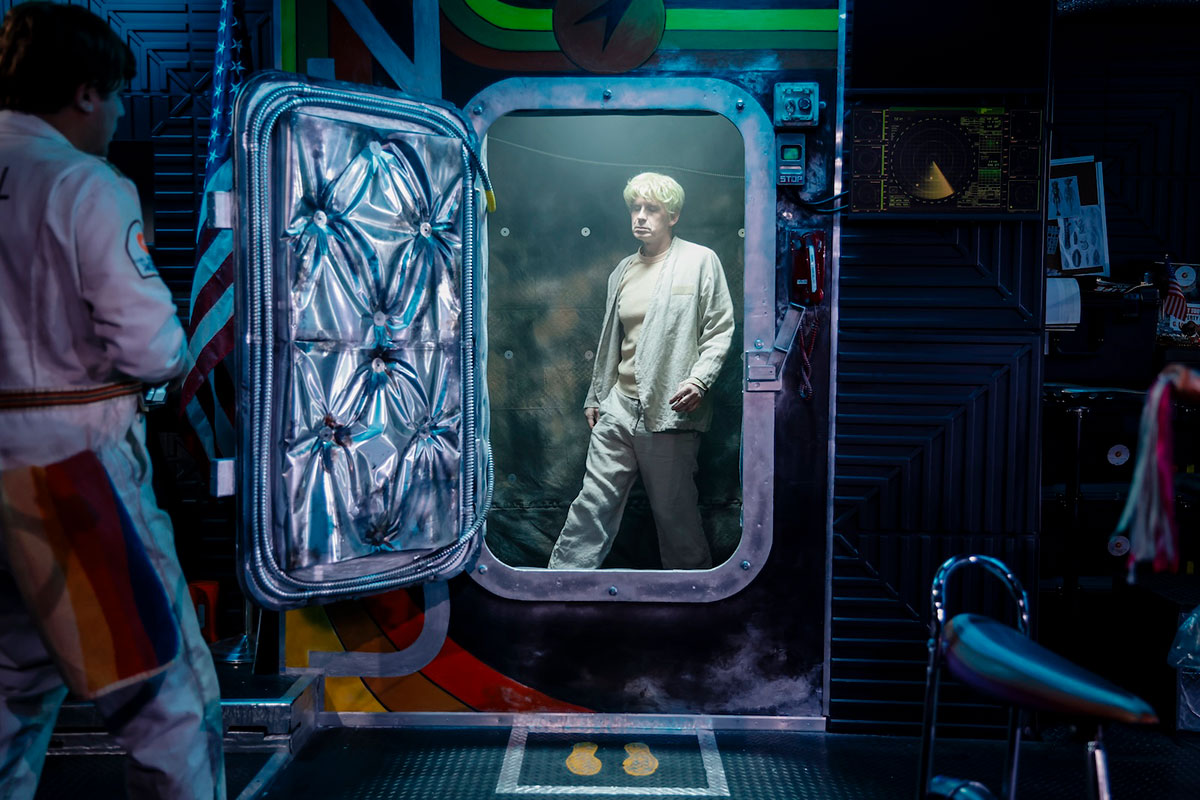
Specimen is funny in some stretches and baffling in others, and while it never hands over a solid answer, it leaves plenty to chew on. Every member of the Nomad’s crew has the exact same hair, and the Specimen alone looks different, until even that difference turns out to be a wig. That detail left me wondering who the specimens really are. One crew member mentions a rumor that the company runs experiments on its own people, and the play never says whether that is only a story. Perhaps the crew are clones, or perhaps the entire voyage, contagion and rival ship included, is a larger VitaNavis experiment that keeps the crew under glass as surely as anything they have collected in their jars. Sharp never says, and I suspect she prefers it that way.
I recommend Specimen to anyone who enjoys absurdist theater that leaves its questions open; anyone who needs a resolution may leave as frustrated as my neighbor. It runs through November 21.
I paid for my ticket through a discount ticketing service.