Review
Macbeth
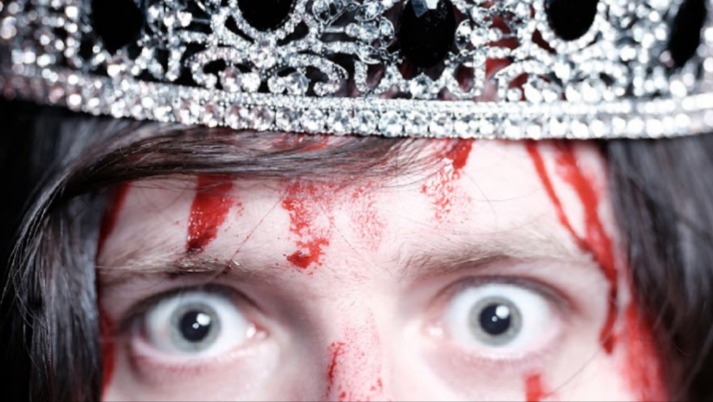
Nightcap Theatre Company brought Macbeth to The Red Pavilion in Brooklyn for two nights at the end of September. I caught the second. I wish I had seen the first, because by the time I could write about it, the run was over. That is a shame. This was a production worth a longer life.
The Red Pavilion is an Asian-themed cocktail bar that mostly books jazz and cabaret acts. Theater does not appear often on its calendar. It should. The room is small and close, and the audience sits at tables within arm’s reach of the action. For a play about paranoia and whispered plots, that intimacy does a lot of work. Directors Taylor Perez Rhoades and T.H. Conley use it well. During the banquet scenes, cast members pour shots and share them with the audience. It could have been a gimmick. Instead it pulled the room into Macbeth’s court and made the later collapse feel like something happening to us.
The production is set in 1919. Macbeth returns from the war a hero and a drunk, and the bottle does as much to unmake him as the witches do. Mikey Fiocco plays that descent with real control. His Macbeth starts as a soldier who wants to be told what he already suspects, and ends as a man who cannot stop talking himself into the next killing. Nothing in the performance is rushed.
Conley’s Banquo is the quiet standout among the men. He is warm toward Macbeth early, then measured, then afraid. When he finally admits that he fears Macbeth “play’dst most foully for’t,” the line lands because we have watched him arrive at it. Sean Costello’s Macduff is solid and believable, a Thane of Fife with weight behind his grief and his anger.
The witches are the production’s best idea. Beth Howie, Cassaundra Reed, and Angel Rafael Tavarez share the Weird Sisters and Hecate among them, and they sing. The original songs, credited to Rhoades and Conley with composer Beach Brooks, give the supernatural scenes a texture the text alone does not. The effect is eerie without being campy. I would gladly listen to them again.
Then there is Lady Macbeth. Rhoades, who also co-directed and co-wrote the songs, is the reason to have been in that room. Her Lady Macbeth is calculating and hungry, a would-be queen who sees the throne before her husband does and will not let him look away. Her unraveling comes after his, and the sleepwalking scene was the finest ten minutes of the night. Her command of the language and the emotion underneath it was complete.
The costumes deserve their own mention. The 1919 setting lives or dies on its clothes, and here it lived. The officers’ uniforms, the gowns at the banquet, the witches’ layered rags, all of it read clearly from across the room and held up at arm’s length. Costume Supervisor Valerie Rhoades and Angelina Bufalini, on costumes, hair, and makeup, gave the production a period look that many companies with far larger budgets fail to reach. What impressed me more came after the show, when I learned that none of it was rented or built for the run. From my understanding, every piece came out of a single personal costume closet. That is not a small thing. It means someone has spent years collecting with an eye toward exactly this, and it means the company had the taste to use it well.
Two small, nuanced issues I had with the production. The weaponry wavers between pistols and swords, and I never understood the rule. It is a very minor distraction in an otherwise coherent 1919 world. The other is not the company’s fault. Midway through the first act, a visibly intoxicated patron wandered over and sat herself at our already full table, and she talked to the performers while they stood in the spotlight beside us. The venue had assigned seating and did not enforce it. Staff did not intervene. A bar that hosts theater needs to protect the stage.
Nightcap Theatre Company is one to watch. I will be watching.