Review
Every Brilliant Thing

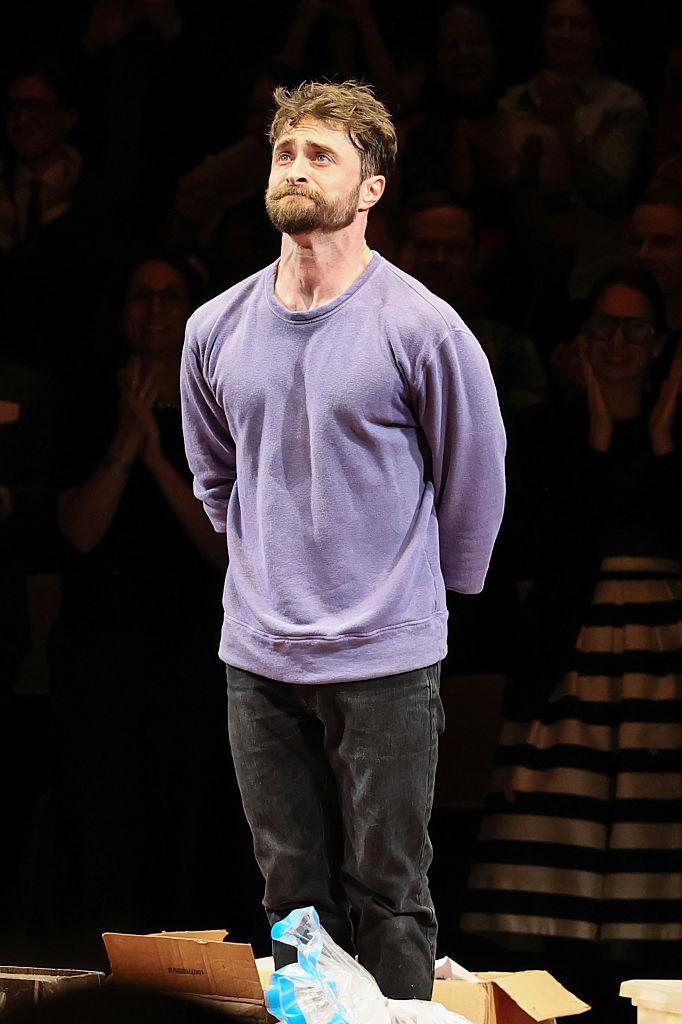
Every Brilliant Thing tells the story of a man who, from childhood through adulthood, makes a list of small, joyful things to help his mother cope with depression. I saw the show at the Hudson Theatre on Tuesday, April 7, at 7 PM, with Daniel Radcliffe in the lead. I wasn’t ready for how deeply it would move me. The play is a personal look at mental health, depression, and the quiet ways we try to keep going. It’s told from the perspective of a man looking back on his mother’s struggles and how those experiences shaped him. The result is funny, heartbreaking, and honest in a way that catches you off guard.
Radcliffe commands the stage from the very first word. There is no barrier between him and the audience. He pulls you in immediately and never lets you go. The performance feels effortless, but it is incredibly precise. For example, in an early moment, Radcliffe scans the audience and gently asks someone to read an item from the list, his tone warm and playful, instantly putting them at ease. Later, during a deliberately weighted silence after describing a painful memory, he lets the moment hang just long enough for you to feel the full emotional impact before he softens the tension with a perfectly timed, small joke that ripples through the crowd. He knows exactly when to push for a laugh, when to sit in silence, and when to let something land without commentary. It is one of the most controlled and generous performances I’ve seen in a long time.
Audience interaction is a huge part of the show, and it works beautifully. You are not just watching this story. You are inside it. The crowd is coached just enough, both before and during, that everything flows naturally. It almost feels rehearsed, even though it absolutely is not. I know that firsthand because I was brought into it. There is something kind and safe about the way the show handles those moments. It never feels forced or uncomfortable. It feels collaborative.
One of the most powerful parts of the show is “The List,” a running collection of, you guessed it, “every brilliant thing” worth living for. The character starts it at age seven after his mother’s first suicide attempt. At first, the list is simple and childlike, with items like “ice cream,” “staying up past your bedtime and being allowed to watch TV,” and “the color yellow.” Later, it grows to include things like “people who can’t sing but do anyway” and “knowing someone well enough to let them check your teeth for broccoli.” These items are funny, specific, and sometimes surprisingly deep, and they hold the whole show together. As the list grows, you see how the character copes and survives. By the end, it feels less like a gimmick and more like a lifeline, both for him and, quietly, for the audience too.
The tone is what makes this show stand out. It moves quickly between funny and heartbreaking, sometimes in the same moment. You might laugh at something small, then suddenly feel something much deeper. This balance makes the show feel real. Life doesn’t separate these feelings, and neither does the play.
There were several times during the show when I found myself in tears. Much of what the play explores feels very personal to me. Growing up with an emotionally distant parent, trying to make sense of that, and then noticing those patterns in my own mental health is something the show handles with care and honesty. It never tells you how to feel. Instead, it simply shows you and lets you take it in.
The creative team behind Every Brilliant Thing really deserves credit. Duncan Macmillan and Jonny Donahoe wrote the play together, bringing real honesty and sensitivity to the script. Jeremy Herrin and Duncan Macmillan direct, balancing humor and emotion throughout. Vicki Mortimer’s set and costume design is simple but effective, making the space feel both close and open to everyone. Jack Knowles’s lighting and Tom Gibbons’s sound add to the emotional impact, always supporting the story without taking away from it. Together, they create a space where vulnerability and connection stand out.

I can’t say enough good things about this show. It’s one of those rare plays that meets you where you are and stays with you long after it’s over. I even bought a magnet, and if I can, I’ll see it again before Radcliffe’s last performance on May 24. Mariska Hargitay takes over the role on the 26th, and I’m interested to see her take on it. This is the kind of theatre that reminds you why it matters.